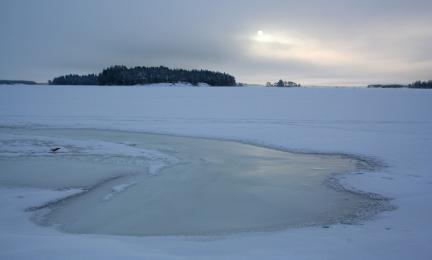
Black carbon (BC) has been estimated to be the second most important climate warming pollutant after CO2. The proposed project will produce new research knowledge on BC emitted from increased economic activity in the Arctic, especially flaring associated with oil and gas drilling, shipping, and domestic heating by small-scale wood combustion. These are increasing but their effects on Arctic climate change are not well known. The objective is to identify the most important BC sources affecting the warming and melting in the Arctic in the recent past, present and the future. The gathered knowledge should actively influence negotiations of the Arctic council of how to facilitate economic development in the Arctic without jeopardizing the Arctic’s function in cooling the Earth’s climate.
The detailed goals of the project are 1) to quantify the contribution of the most important sources, especially flaring related to oil drilling, shipping, and wood combustion to the BC observed in the Arctic atmosphere, snow and ice in the present time and in the recent past, 2) to quantify the climate forcing of BC in the atmosphere and snow, and 3) to estimate how the above-mentioned effects affect Arctic climate during the next 50 years. SYKE project team will review and analyze the spatial and temporal proxies for locations of the emission sources in the Arctic.
Further information
Niko Karvosenoja, Head of Unit, Finnish Environment Institute Syke, firstname.surname@syke.fi
Air Pollution