Project description
Residues of Active Pharmaceutical Ingredients (APIs) enter the environment mainly as a result of consumption of pharmaceutical products (excretion) and via unused pharmaceutical waste or via emissions from pharmaceutical manufacturing plants. The complex behavior and impact of APIs in the environment is not yet well known, but there is indication of harmful effects of some groups of APIs (e.g. endocrine disrupting hormones, behavioral changes in organisms and antimicrobial resistance enhancing antibiotics) to ecosystems and some APIs are known to be extremely persistent and bioaccumulative.
The challenges related to the presence of pharmaceuticals in environment and wastewater as well as in urea and in sewage sludge and for its exploitation have been recognized, despite their high nutrient content. Being a significant technical, economic and health issue, it is necessary to identify how the pharmaceutical residue in the environment and consequently food production can be most effectively minimized.
API load into the environment can be reduced by introducing advanced treatment technologies at municipal waste water treatment plants (WWTPs) or at primary emission sources. Removing API residues at primary source is technically more efficient than removal from MWWP effluents, sewage sludge, or drinking water.
Objectives
This project aimed to identify the APIs entering the waste water stream at different sources and tested effective technological solutions to treat APIs at their primary emission sources. The different technologies were tested in pilot studies. In support of new technologies, the project sought pollution prevention instruments in collaboration with key stakeholders.
Work packages (WP)
WP1: Identification of pharmaceutical residue emission loads and risks (Syke & HY)
WP2: Pilot testing of waste water technologies (LUT & Syke)
WP3: Cost-effectiveness of wastewater treatment solutions (Syke)
WP4: Policy recommendations (Syke & HY)
WP5: Coordination and communication (Syke, HY, LUT)
Research partners and Coordinators
The Consortium of Project and Syke: PhD, Leading Expert Taina Nystén
LUT: Professor Mika Mänttäri
HY: Docent Tiina Sikanen
Subcontractor Law and Water: D.Sc. (Tech.), Water Expert Niina Vieno
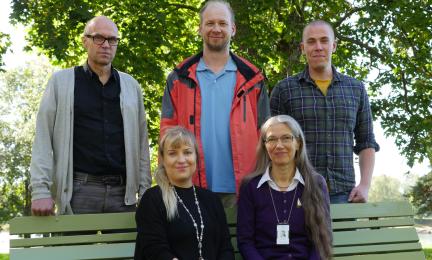
Coordinators of the Syke project organization. Top row from right: Jyrki Laitinen (WP3), Jukka Mehtonen (WP4) and Lauri Äystö (WP1). Bottom row: Päivi Fjäder and Taina Nysten (project consortium, Syke & WP5).
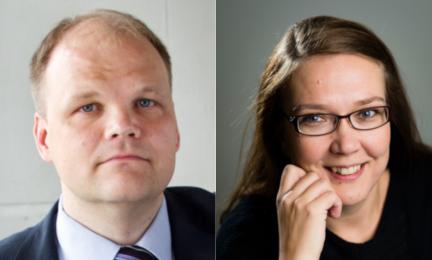
Mika Mänttäri (LUT) ja Taina Sikanen (HY).
Key results
Final report
- EPIC_Content-Stakeholders-Benefits-Further information (pdf, 1008.67 KB)
- EPIC_WP1-Emissions and risk identification (pdf, 1.43 MB)
- EPIC_WP2-Development of new Cleantech solutions (pdf, 1.21 MB)
- EPIC_WP3-Cost-effectiveness of waste treatment solutions at different sources (pdf, 1.08 MB)
- EPIC_WP4-Policy recommendations for sustainable management for pharmaceuticals (pdf, 1.64 MB)
Final seminar of the EPIC project 17.5.2019
- Nystén T. - Policy brief Environmental drug load can be reduced & Efficient Treatment of Pharmaceutical Residue at Source - EPIC (pdf, 1.64 MB)
- Äystö L. - Pharmaceutical load from primary emission sources to WWTPs and from WWTPs into the environment (pdf, 3 MB)
- Sikanen T. - Biotransformation of drugs (pdf, 3.75 MB)
- Mänttäri M. - How to get rid of pharmaceutical residue (pdf, 1.29 MB)
- Laitinen J. - Cost-effectiveness of waste water treatment solutions at different sources (pdf, 1.37 MB)
- Mehtonen J. - Pharmaceuticals in environmental permits (pdf, 1.47 MB)
- Teräsalmi E. - Including environmental criteria for drug regulation (pdf, 1.25 MB)
- Karlsson S. - Environmental classification of pharmaceuticals - Implementation to Finland (pdf, 1.18 MB)
- Vieno N. - Conclusions of the EPIC 17.5.2019 seminar (pdf, 1.2 MB)
Most important publications from project organizations
- Äystö, L., Vieno, N., Fjäder, P., Mehtonen, J. & Nystén, T. 2023. Hospitals and households as primary emission sources for risk-posing pharmaceuticals in municipal wastewater. Ecotoxicology and Environmental Safety 262, article 115149. 10 p.
- Ahkola, H., Äystö, L., Mehtonen, J., Nystén, T. & Leppänen, M. 2019. Passive sampling as a tool for determining total chemical discharge in waste waters, Poster, presented at the 29th Annual meeting of SETAC 2019, Helsinki 26.–30.5.2019.
- Ajo, P., 2018. Hydroxyl radical behavior in water treatment with gas-phase pulsed corona discharge, Acta Universitatis Lappeenrantaensis 793, 1456-4491.
- Ajo, P., Preis, S., Vornamo T., Mänttäri, M., Kallioinen, M. & Louhi-Kultanen, M. 2018. Hospital Wastewater Treatment with Pilot-Scale Pulsed Corona Discharge for Removal of Pharmaceutical Residues, Journal of Environmental Chemical Engineering 6(2), 1569-1577.
- Karlsson, S. 2018. Lääkeaineet ympäristössä – luokittelua Ruotsin malliin. Apteekkari-blogi 28.2.2018.
- Karlsson, S., Sikanen, T., Vieno, N., Virtanen, V. & Äystö, L. 2020. Lääkkeiden ympäristövaikutukset. Teoksessa Kariaho ym. (Toim.), Pharmaca Fennica 2020: 1373–1375.
- Karlsson, S., Äystö, L., Vieno, N., Yli-Kauhaluoma, J. & Sikanen, T. 2019. The impact of human drug metabolism and disposition on the occurrence of pharmaceuticals in wastewaters – A case study on Finnish influent wastewater, Poster, presented at the 29th Annual meeting of SETAC 2019, Helsinki 26.–30.5.2019.
- Laitinen, J., Näykki, T., Perkola, N. & Äystö, L. 2017. Mittausten kehittämisellä tehokkaampaan ravinteiden kierrätykseen. Vesitalous 4/2017: 14–20.
- Laitinen, J., Vieno, N. & Kandelberg, K. 2020. Jätevesien lääkejäämien käsittelyn kustannustehokkuus. Vesitalous 1/2020: 17–19.
- Mehtonen, J., Äystö, L., Vieno, N. & Nystén, T. 2020. Lääkeaineet lääketeollisuuden ympäristöluvissa. Vesitalous 1/2020: 20–22.
- Mänttäri, M., Vornamo, T. & Kallioinen, M. 2020. Tekniikat lääkeaineiden poistamiseen jätevesistä. Vesitalous 1/2020: 13–16.
- Nystén, T. 2016. Lääkejäämät kannattaa puhdistaa jo päästölähteillä. Apteekkari-blogi 23.0.2016.
- Nystén, T. & Äystö, L. 2020. Ohjauskeinoilla ja tehokkailla jätevedenpuhdistusmenetelmillä voidaan vähentää lääkejäämien päästöjä ympäristöön. Vesitalous 1/2020: 4.
- Nystén, T., Äystö, L., Laitinen, J., Mehtonen, J., Alhola, K., Leppänen, M., Perkola, N., Vieno, N., Sikanen, T., Yli-Kauhaluoma, J., Karlsson, S., Virtanen, V. & Teräsalmi, E. 2019. Environmental drug load can be reduced. SYKE Policy Brief 17.5.2019.
- Sikanen, T., Karlsson, S., Äystö, L., Vieno, N. & Yli-Kauhaluoma, J. 2020. Systemaattinen lähestymistapa lääkeaineiden metabolian huomioimiseksi ympäristömittauksissa. Vesitalous 1/2020: 9–12.
- Sikanen, T., Äystö, L., Vieno, N., Karlsson, S. & Virtanen, V. 2020. Lääkkeiden käytön ympäristövaikutukset. Lääkärilehti 22/2020: 1363–1368.
- Teräsalmi, E. 2017. From Environmental Theories to Pharmacy Practice, Poster presented in 6th Pharmaceutical Sciences World Congress (PSWC) Stockholm, Sweden 21.–14.5.2017 Future medicines for one world, FIP, congress abstracts.
- Teräsalmi E., Sikanen T., Kärkkäinen R., Äystö L., Mehtonen J., Virtanen V. & Nystén T. 2020. Lääkkeiden ympäristövaikutusten hallinta sääntelyn avulla. Dosis: Farmaseuttinen aikakauskirja 36(3), 354–366. English summary: Prevention of environmental adverse impacts of medicines from regulatory perspective.
- Vieno, N., Karlsson, S., Äystö, L., Mehtonen, J., Sikanen, T., Kärkkäinen, R., Yli-Kauhaluoma, J. & Nystén, T. 2019. Lääkeaineiden ympäristöluokittelun käyttöönoton mahdollisuudet Suomessa. Suomen ympäristökeskuksen raportteja. 19/2019.
- Vieno, N., Sikanen, T., Äystö, L., Mehtonen, J., Karlsson, S. & Nystén, T. 2020. Lääkeaineiden ympäristöluokituksen hyödyt ja haasteet. Vesitalous 1/2020: 23–24.
- Vieno, N., Äystö, L., Mehtonen, J., Sikanen, T., Karlsson, S., Fjäder, P. & Nystén, T. 2020. Lääkejäämien vesistöriskien arviointi Suomessa. Vesitalous 1/2020: 25–28.
- Äystö, L., Fjäder, P. & Nystén, T. 2018. Pharmaceutical load to municipal wastewater treatment plants and their primary emission sources. Poster, presented at the Water JPI Conference in Helsinki 6.–7.6.2018.
- Äystö L., Laitinen J., Vieno N., Nystén T., Fjäder P. & Kandelberg K. 2020. Lääkejäämien esiintyminen sairaalajätevedessä – Tapaus TYKS. Ympäristö ja Terveys 4/2020: 70–75.
- Äystö, L. & Mehtonen, J. 2017. Tuleeko lääkejäämien poistaminen jätevesistä pakolliseksi? Vesikirje 1/2017.
- Äystö, L., Mehtonen, J., Vieno, N., Ahkola H., Leppänen, M., Sikanen, T., Yli-Kauhaluoma, J. & Nystén, T. 2019. Lääkeaineet lääketeollisuuden ympäristöluvissa. Suomen ympäristökeskuksen raportteja 20/2019.
- Äystö, L., Vieno, N., Fjäder, P., Mehtonen, J. & Nystén, T. 2020. Lääkeaineiden kuorma jätevedenpuhdistamoille ja niiden primääripäästölähteet. Vesitalous 1/2020: 5–8.
- Äystö, L., Vieno, N., Sikanen, T., Karlsson, S. & Virtanen, V. 2019. Ympäristöön päätyvien lääkeainejäämien aiheuttama riski pintavesille Suomessa. (1. versio julkaistiin 27.11.2019. Taulukkoa päivitetään satunnaisesti, kun uutta aineistoa on saatavilla.)
More information
Leading Expert Taina Nystén, (Syke), firstname.lastname@syke.fi
See also
Blogs, news and announcements
- Syke Policy Brief 17.5.2019: Environmental drug load can be reduced
- Helth Care Without Harm 31.1.2018: How Doctors Can Help Reduce Pharmaceutical Pollution (europe.noharm.org)
Projects and campaigns
- CWPharma
- SUDDEN (sudden.fi)
- Pharma in the environment (pharmaenvironment.org)
- Generationgreen (helsinki.fi)
Publications
Cooperation parties
- Business Finland (businesfinland.fi)
- LUT (lut.fi)
- University of Helsinki, Faculty of Pharmacy (helsinki.fi)
- South Karelia Social and Health Care District (EKSOTE) (ekhva.fi)
- Water Protection Association of the River Vantaa and Helsinki Region (VHVSY) - in Finnish (vhvsy.fi)
- WatMan Ltd Oy - in Finnish (watman.fi)
- Watrec Oy (watrec.com)
- Wapulec Oy (wapulec.com)
- Finnish Water Utilities Association (FIWA) (vesihoitolaitosyhdistys.fi)
- Law and Water Ltd - in Finnish (lakijavesi.fi)
You can access the project's Finnish pages via the "Suomeksi" link in the upper right corner of this page.