Background
The Arctic has warmed four times faster than the global average. In addition to warming, climate change alters precipitation patterns. Consequently, the amounts of nutrients and suspended solids draining from catchments to waterbodies will increase. Arctic freshwaters are one of the most vulnerable ecosystems in terms of biodiversity. Microbes, organisms invisible to the naked eye, are still relatively poorly understood in these waters. Microbes include specific algae, bacteria and fungi, among others, and their various functions are related to, for example, carbon and nutrient cycling, photosynthesis and decomposition.
Aims
This project brings much needed insights on microbial communities in Arctic freshwater ecosystems. Specifically, this research reveals how taxonomic diversity, community assembly, and various functions vary with climatic conditions, simultaneously acknowledging local environmental factors and catchment properties, within the Circum-Arctic region.
The project examines
- past changes using temporal, existing data,
- current patterns based on sampling in seven Circum-Arctic study areas and by employing molecular methods, and
- future trends by incorporating advanced statistical modelling and climate change scenarios.
The results help to understand what climate change means for biodiversity in Arctic freshwaters that have already gone through and will face even stronger changes in temperature, precipitation, and related factors. Understanding climate change impacts on microbial communities is vital as they regulate ecosystem processes and contribute to ecosystem services through their biodiversity and functions.
News
First sampling trips completed
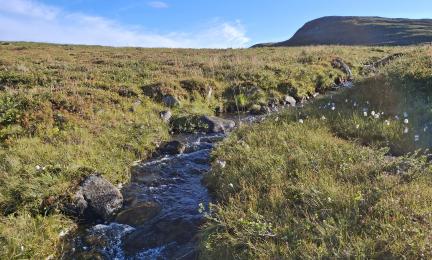
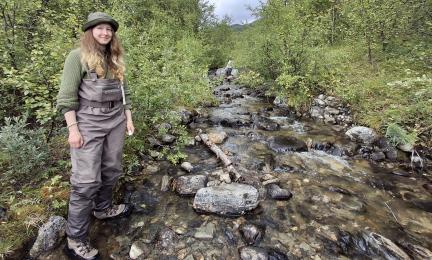
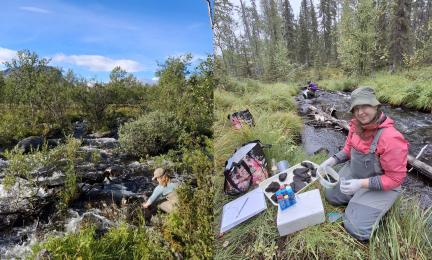
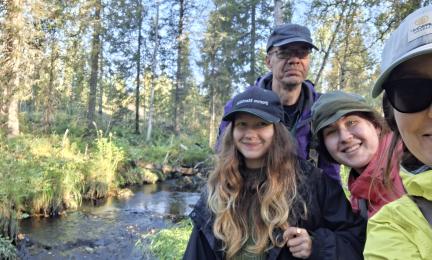
The first field sampling trips of the FRAMES project were carried out in August 2026 in the two study areas of Gilbbesjávri–Ivgobahta and Oulanka–Salla, located in northern Finland and Norway. The fieldwork team consisted of Denise Mäkinen, PhD researcher in the project, intern Juulia Mannela, researcher Krister Karttunen and senior researcher Annika Vilmi-Väätänen.
A total of 40 streams were surveyed, reaching the sampling targets in both study areas.
The microbial samples collected from stone surfaces are now stored in a deep-freezer, awaiting DNA analyses that will begin later this autumn. Voucher specimens of macroalgal samples were prepared by drying them with silica gel and the remaining sample material is stored in a freezer. The aquatic bryophyte samples have been dried and are awaiting further processing. The traditional diatom samples are kept in cold storage until permanent microscope slides can be prepared. Additionally, benthic invertebrate samples collected from the first study area are also being kept in cold storage while awaiting further processing. In addition to the biological samples, water samples were collected from each stream. Analyses of their metal concentrations are still in progress.
The data collected during the field trips will be processed and analysed during autumn and winter. The lessons learned from the first two field trips will be valuable when planning next year’s expeditions, which will take us farther afield and into more challenging conditions!
More information
Senior researcher Annika Vilmi, Finnish Environment Institute (Syke), forename.surname@syke.fi
Freshwater microbes in the warming Arctic: Insights on diversity, community assembly and ecosystem functions (FRAMES) (research.fi)