News and events
GOVAQUA news
LinkedIn blog: Digital solutions are crucial to supporting water governance in Europe (April 22, 2026)
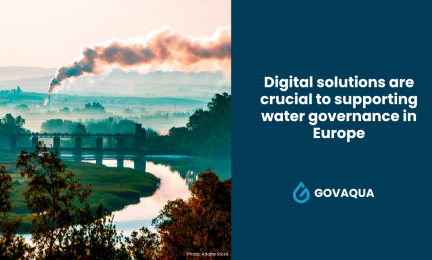
Europe’s water systems are under increasing pressure. Climate change, competing sectoral demands, and growing societal expectations are reshaping how we manage and govern water resources. How can digital solutions support sustainable, equitable, and resilient water governance?
To enable sustainable water management and governance across Europe and support implementation of water policies and strategies, continued improvement of digital solutions that provide trusted, relevant, accessible, and timely information is required. Such information is increasingly needed by a wide range of actors from local to EU level. Digitalisation of water management including increasing use of AI is a key enabling area of the EUWRS to accelerate and simplify water management.
As part of the GOVAQUA project, we looked at end user perspectives on five good practices that respond to different water issues and stakeholder needs in water governance.
What works: Good Practices
The selected cases highlight a shift in how water information is generated, shared, and used:
- Riverfly Partnership (UK) and Guadalquivir SAIH (Spain) illustrate the increasing importance of citizen and business based monitoring of water bodies. This helps to supplement statutory ecological monitoring and report for policies such as the Water Framework Directive, or as part of wider authority-based monitoring of water resources.
- Copernicus Emergency Management Service (EU and global) and Destination Earth (EU and global) provide insights into European Commission funded initiatives. They provide relevant data that is demanded by a wide range of actors on water related risks that society faces.
- Water Risk Filter (EU and global) shows how an international NGO (WWF) is engaging private companies to meet their information needs in support of water governance.
Building blocks of effective digital solutions
What do sustainable water management, implementation of water policies and strategies, and governance across Europe need to be successful?
- First, continuous engagement to understand end user needs is essential.
- Second, transforming data into information is central to these practices, as they are designed to collect, process, store, and enable use of data.
- Third, to design, operate, and continually improve these digital solutions for information sharing requires significant financial investment to pay for the social and digital components.
Our findings help to redefine what water solutions need to be in our ever-evolving digital age. These good practices point to a broader transformation: digital water solutions are no longer just tools—they are core enablers of governance that redefine how water is managed across Europe.
- Name and title of author: Kit Macleod, Giovanni Bernardi, and Virginie Keller
- Organisation: UKCEH
GOVAQUA project is funded by the European Union. Views and opinions expressed in this blog are those of the author only and do not necessarily reflect those of the European Union.
LinkedIn blog: Economic and financial instruments help tackle water problems (March 6, 2026)
How can we use economic and financial instruments to tackle water problems and forward water policy objectives? We went looking for good practices and found examples from across the globe, that could be adapted to the European context.
There is a persistent misalignment between water scarcity and risks, and the economic signals and financing structures that shape water use, pollution control, and infrastructure and ecosystem investment. In practice, this can translate into inefficient water allocation under increasing scarcity, underinvestment in maintenance and adaptation, and limited capacity to internalise environmental externalities. Incentives, cost allocation, and investment mobilisation offer promising options to address these issues.
Within the framing of the EU Water Resilience Strategy, these instruments are relevant as long as resilience depends not only on technical solutions but also on governance arrangements that ensure effective demand management, sustainable financing, and incentives consistent with ecological thresholds and long-term risk reduction.
Regulated water trading under scarcity
Regulated water trading has been taken into use in Murray-Darling Basin, Australia. This good practice shows how a market-based mechanism, when embedded in a strong regulatory framework, can increase flexibility under scarcity by allowing water to be reallocated among users. Its relevance lies in the institutional conditions required for effectiveness: clearly defined entitlements, transparent accounting and metering, monitoring and enforcement, and safeguards to manage third-party impacts and protect environmental objectives. The main lesson is that trading can support resilience and allocative efficiency, but only when governance capacity and ecological constraints are firmly in place.
Incentives to protect water quality
The Payments for Ecosystem Services (PES) in New York City Watershed, USA, case illustrates an incentive-based approach to water quality protection. Resources are directed upstream to promote land management practices that reduce pollution and maintain watershed functions. It is instructive as a governance model because it aligns incentives across actors and jurisdictions, shifting emphasis from end-of-pipe treatment toward prevention. The elements that could be transferred to Europe include targeting, conditionality, and coordinated stakeholder arrangements, as well as the potential to avoid or defer high-cost infrastructure by investing in ecosystem services.
Efficiency, environmental protection, and resilience
The good practice cases we looked at suggest that economic and financial instruments can make a substantive contribution to European water governance goals — for efficiency, environmental protection, and resilience — but they are insufficient in isolation. Their effectiveness is contingent upon institutional capacity and policy coherence.
For implementation of the Water Resilience Strategy, the practices require several enabling conditions:
- Binding ecological limits and clear policy objectives to prevent unsuited incentives and ensure environmental integrity.
- Strong monitoring, data infrastructure, and enforcement to secure credibility, compliance, and adaptive management.
- Equity and affordability safeguards to preserve social legitimacy and manage distributional impacts.
- Stable, long-term financing models, including mechanisms that can mobilise capital for infrastructure renewal and nature-based solutions.
- Cross-sectoral alignment, notably with agriculture, spatial planning, and energy, given the multi-driver nature of water risk.
Overall, these good practices should be interpreted as transferable governance and financing modalities that can support the Water Resilience Strategy’s objectives. For this, they need to be adapted to European legal, hydrological, and socio-economic contexts and integrated within a broader architecture of regulation, planning, and accountability.
- Name and title of author: Esther Díaz-Cano; Julio Berbel
- Organisation: Universidad de Córdoba
GOVAQUA project is funded by the European Union. Views and opinions expressed in this blog are those of the author only and do not necessarily reflect those of the European Union.
LinkedIn blog: Implementing water policy on the ground: good practices of legal and regulatory instruments (February 26,2026)
Legal and regulatory instruments play a central part in sustainable and equitable water use. They translate high-level policy goals to more specific enforceable rules. In this article, we reflect on good practices of legal and regulatory instruments in Europe for implementing ecological flows (e-flows) to meet ecosystem needs, for allocating water to different uses in times of scarcity, and for regulating water use and water impacts and dependencies in companies’ value chains.
The EU Water Resilience Strategy aims to restore and protect the water cycle, enhance resilience against droughts and water scarcity and balance competition between economic sectors and environmental needs for water resources. Implementing e-flows (the amount of water required for the river ecosystem to thrive), improving water allocation systems and integrating water-related risks and impacts in company management are key steps towards reaching the Strategy’s goals.
Good practices towards sustainability
In our search for good practices, we found multiple examples on how legal and regulatory instruments can help implement water policy on the ground. The implementation of e-flows in the river basin management planning process of Austria is good practice for prioritising and focusing restoration efforts on selected water stretches. It is a phased approach, combining ecological with administrative criteria. In France, the collective allocation system Organisme Unique de Gestion Collective and territorial planning frameworks such as projets de territoire pour la gestion de l’eau are good practices towards more sustainable water allocation. They exemplify ways to strengthen quantitative water management under the Water Framework Directive and build water resilience. The Alliance for Water Stewardship International Water Stewardship Standard illustrates the role soft law has in governing water in companies’ value chains. The Standard offers a comprehensive, tested, user- and stakeholder-driven framework that links water impact and dependencies at sites and in organisations’ value chains with European and international water-related policy goals.
Legal and regulatory instruments should be combined with other governance mechanisms
The good practice cases on e-flows show that their requirements must be matched with technical advice and financial support to water uses. They also require regulatory instruments that allow regular review and flexible modifications to water use and abstraction licenses, and, where needed, legal reforms to tackle older licenses.
In water allocation, our good practices suggest that locally adapted, collaborative approaches are most effective when they are embedded in a robust legal framework. They should also be supported by credible public oversight, and combined with clear mechanisms to ensure monitoring, implementation, compliance and long-term behavioural change. For EU Member States, uptake of these good practices might require modifying legal and regulatory arrangements for river basin and local water planning under the Water Framework Directive, as well as of licensing conditions and associated enforcement arrangements.
Concerning the regulation of value chains for more sustainable water use, European public regulation of international value chains has been evolving to align with both the European Green Deal objectives and competitiveness and security strategies and policies. Standards, as a form of soft law, then continue to play an important role as user- and stakeholder-driven frameworks for planning, measuring and assuring companies’ activities towards sustainable and equitable water use.
- Name and title of author: Eleftheria Kampa, Josselin Rouillard & Isabell Storsjö
- Organisation: Ecologic & Finnish Environment Institute
GOVAQUA project is funded by the European Union. Views and opinions expressed in this blog are those of the author only and do not necessarily reflect those of the European Union.
LinkedIn blog: Water governance in the changing EU policy landscape – what does ‘good’ look like? (December 19, 2025)

Over the past two years, GOVAQUA project has identified, assessed and validated innovative water governance practices across Europe that support reaching the EU water policy goals. At the same time, the continent has been facing worsening water problems, making our task ever more urgent. As our results are now emerging, the EU policy landscape is in flux. This blog starts a series presenting the good practices we have found, by unpacking our definition of ‘good’ and reflecting it against the recent policy developments.
On the lookout for ‘good’ water governance practices
Water problems have long been framed to be problems of water governance. In the EU context, the lack of progress with reaching the Water Framework Directive goals has been seen to result from implementation challenges - i.e. poor governance – the goals themselves being valid. This was also the starting point of the GOVAQUA project. We were tasked with supporting the implementation of the EU Green Deal, Water Framework Directive and the UN Sustainable Development Goals with measures that enhance cross-sectoral coordination, transparency and inclusivity at multiple levels from river basin to Member States and the EU.
Over the past two years, we’ve been busy identifying, assessing, developing and validating innovative water governance practices for this purpose. As water and its governance are always shaped by local contexts, we intentionally refrained from looking for ‘best practices’ and instead focused on ‘good’ ones.
How to tell what ‘good’ looks like in water governance?
In our depiction, good water governance practices contribute to achieving water-related policy goals and targets in a sustainable and equitable manner. For a practice to be called good it must have been tested in real world contexts, assessed and validated by stakeholders and independent evaluators against specific principles and criteria. Expanding on the governance principles and indicators from OECD and tailoring them to the level of governance instruments, approaches and arrangements, we applied the following criteria:
Water governance practices are good when they exemplify…
Effectiveness
1. Address a problem or a need related to sustainable and equitable water use
2. Connect and contribute to water-related policy goals and targets
3. Define and follow clear roles and responsibilities for different stakeholders
4. Link to appropriate scales within basin or other water governance systems
5. Match or advance the level of technical, financial and institutional capacity in the given water governance system
Efficiency
1. Utilise, share and enhance adequate water-related data and information
2. Are cost-effective and/or help mobilising financing for associated water solutions
3. Connect to and advance sound regulatory frameworks
Inclusivity and reflexivity
1. Are built on or advance transparent and accountable processes and outcomes
2. Are built on or advance equal participation and collaboration between stakeholders and water justice, and are gender-sensitive
3. Include and advance regular monitoring and evaluation mechanisms
Good practices can be implemented at different performance levels, typically requiring different levels of effort and resources, building on continuous improvement. The good practices in focus in the GOVAQUA project are all examples of emerging water governance innovations that are not yet broadly applied but hold promise for replicability and up-scaling in the EU context.
Good practices remain critical in the changing EU policy landscape
In the coming months, we will be sharing our good practice findings exemplifying different dimensions of innovative water governance: legal and regulatory approaches, participatory and collaborative approaches, economic and financial instruments, and digital solutions for information sharing. They will be accompanied with a comparative analysis of the role of different policy intervention points and necessary conditions for the success of the practices.
Whilst our new evidence of ‘what works’ in the EU water policy implementation is emerging, the broader policy landscape is changing. First, the EU Water Resilience Strategy launched in June 2025 has raised water high on the political agenda, which is a positive development. The Strategy’s thematic Objectives reflect the key water problems Europe is facing. However, due to political changes, competitiveness and security pressures, the Strategy was in many ways weakened over its preparation period. The five Enabling areas and list of Actions, albeit broad and exceptionally detailed, come across as fragmented and their resourcing uncertain.
Furthermore, the Water Resilience Strategy does not set binding targets nor introduce new legislation, rather emphasising more efficient and effective processes. The Commission has newly launched a Simplification package of environmental legislation, including opening the Water Framework Directive to ease mining permitting of critical raw materials in the EU. There is a valid concern that the opening will lead to deregulation instead of mere simplification, as has been the experience with the other recent omnibus packages, weakening sustainability and equity safeguards.
At the same time, as the 7th European Environment Agency’s State of the Environment report shows, the water problems in the EU are in many ways worsening. The problems are accelerated by climate change, over-abstraction, diffuse pollution, degradation of ecosystems, and in general, inadequate water management and governance. There is a pressing need to prioritise environmental concerns.
Whether the Water Resilience Strategy as the key overarching policy framework succeeds in achieving its Objectives now depends on the ways it is further interpreted with, strongly relying on its first Enabling area of Governance and implementation. The evidence we have gathered across Europe speak of broad commitment across sectors and actors to work together for enhancing sustainability, equity and resilience. It is critical now that the existing policy and governance frameworks and their goals and targets are not diluted, but their implementation rather supported with solid good practices.
GOVAQUA project is funded by the European Union. Views and opinions expressed in this blog are those of the author only and do not necessarily reflect those of the European Union.
Innovative water governance practices, first steps on transition pathways and the many meanings of the River Thames – GOVAQUA’s annual meeting (June 3, 2025)
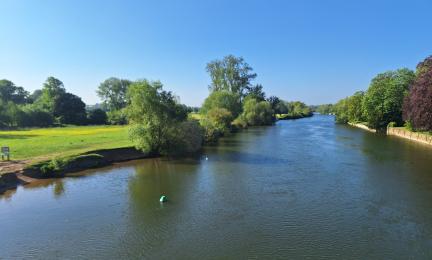
To boost water resilience and ensure sustainable and equitable water use, we need to try, test and validate innovative water governance practices – that’s what our work in GOVAQUA is all about. Key takeaways from our 3rd annual meeting below - if you are interested in our topics, get in touch!
GOVAQUA team convened in mid-May at UK Centre for Ecology and Hydrology in sunny Wallingford to take stock of progress on our analyses and co-creation in Living Labs, and to take first steps towards building transition pathways bringing together our final recommendations. We also had a unique opportunity to hear from various River Thames users on the many meanings of the river and on the criticality to work together for improved river health for the benefit of people enjoying its waters and nature alike.
Sharing lessons learned on innovative water governance
GOVAQUA experts are currently conducting case studies of innovative water governance practices representing legal and regulatory approaches, participatory and collaborative approaches, economic and financial instruments and digital solutions for information sharing, focusing on their effectiveness, efficiency, inclusivity, reflexivity, replicability and scalability.
Good practices are emerging, for example, from water allocation mechanisms in France, e-flows in Austria, regulating water-intensive value chains across Europe, water banks in California, Catchment-Based Approach in the UK, and citizen science partnerships and business water risk assessment tools, among others. Towards 2026, the documented practices will be shared via an online repository, tailored factsheets and presentations to the various stakeholder groups – stay tuned!
Meanwhile, our Living Labs are busy with their Experimentation phase, focusing on
- Crau, France – payments for ecosystem services between hay growers and orchards
- Archipelago Sea Catchment, Finland – water stewardship collective action and results-based financing mechanisms in food value chain to curb diffuse pollution from agriculture
- Axarquía, Spain – digital tools supporting water-user association and hydro-economic modelling in water scarce conditions
- River Thames, UK - open data portal on the status of the Oxfordshire rivers https://oxfordrivers.ceh.ac.uk/
- Nordic Hydropower, Finland and Sweden – comparison of governance approaches to sustainable hydropower
- Danube Delta, Dunavat, Romania – Nature-based solutions
GOVAQUA’s good practice case studies feed directly to the work of the Living Labs, which then again provide further validation on the dos and don’ts of the practices in question.
Navigating transition pathways
GOVAQUA conceptualises for the first time sustainability transition in the context of water governance. Our multidisciplinary team discussed the various approaches that can be applied. One of them is transition pathways, which can be described as desirable pathways to support governance experimentation. In GOVAQUA, we are looking into three types of pathways – characterised by innovation, policy or pressure driven changes. To work contextually, we need look into the conditions for our desired pathways.
In GOVAQUA, transition pathways…
- Bring together lessons from case studies and Living Labs.
- Help understanding the policy conditions for sustainability transitions.
- Are used to communicate messages to broader policy audiences.
- Provide conceptual framing for our research outputs and publications.
First-hand experiences of the River Thames
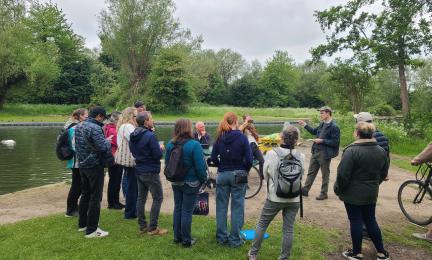
We concluded our meeting with a wonderful visit to the River Thames in Oxford and Wallingford hosted by our Living Lab team of Thames21, The Rivers Trust and the UK CEH. We had a chance to hear from various river users including swimmers and rowers, historians, citizen science experts, water company representatives, and city council and Environment Agency officials. The Thames is an ecosystem, water source, bathing site, transport route, racing arena and unfortunately, also treated as a sewer, the water quality of which is occasionally so poor it may cause sicknesses and skin conditions. There are, however, signs of its ecological indicators improving.
The river users we met all emphasized the importance of shared understanding of the many meanings and values of the river, expanding the knowledge base now initiated by the Living Lab and the Oxford Rivers Portal (oxfordrivers.ceh.ac.uk), and further strengthening collaboration between authorities, water companies, municipalities, research, NGOs and citizens. Without the Thames, the Oxfordshire area would not be what it is today.
The visit and the meetings left us inspired and motivated to continue our work, showing how water connects us all. They underlined the criticality of collaboration initiatives and communication tools and platforms, i.e. innovative practices of water governance, in achieving our shared water-related goals.
Author: GOVAQUA Consortium lead Suvi Sojamo
Season’s greetings from GOVAQUA! (December 20 2024)
Looking back at 2024…
Our research teams on legal and regulatory approaches, participatory and collaborative approaches, economic and financial instruments and digital solutions for information sharing have completed their comprehensive reviews and are currently busy with case study analyses and comparisons
Our Living Labs in Finland, France, Romania, Spain and the UK have started their active stakeholder engagement and co-creation, applying the GOVAQUA Assessment tool for water governance innovations with local partners to reach a shared understanding of the challenges at hand and the desired future states, and agreed on innovative practices to be further experimented with.
We have launched our first digital tool with the lead of the UK CEH and the Rivers Trust https://oxfordrivers.ceh.ac.uk/ , providing past and current data on river conditions in the Oxford area
We have had excellent discussions with our audiences in our WaterGovernance2025 Synergy Group webinar in the EU Green Week, INBO World General Assembly in Bordeaux, Alliance for Water Stewardship Global Forum in Edinburgh, Water4All consultative workshop and special session in the IAHR Conference in Lisbon, among others.
We’ve launched two policy briefs to support the EU Water Resilience Strategy development
- Water resilience is built with better water governance with the WaterGovernance2027 Synergy Group (hdl.handle.net)
- Building water resilience: Towards better implementation of ecological flows and water allocation in Europe (hdl.handle.net)
In 2025, we look forward to sharing more publications, completing our case study analyses and systematic comparison, diving deeper into experimentation in the Living Labs, EURO-INBO in Parma, and starting building our recommendations on transition pathways and good practices for sustainable and equitable water governance in Europe.
Many thanks for your collaboration and happy holidays!
GOVAQUA Team

2nd GOVAQUA seminar at INBO 2024: Advancing water governance innovation (November 26 2024)
The seminar opened with a summary of the Valencia event, where discussions had centered on best practices and governance challenges. This set the tone for an exchange of ideas and tools during the seminar, including the presentation of the GOVAQUA assessment tool and a series of forward-looking governance innovations.
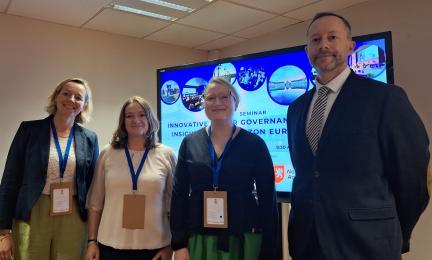
Key highlights
Reflections from Valencia 2023: Participants revisited key findings from the previous event, including lessons learned from stakeholder engagements and examples of innovative governance approaches.
The GOVAQUA assessment tool: This new tool, designed to evaluate water governance at the catchment level, was a major focus of the seminar. It has already been tested in GOVAQUA’s living labs and aims to enhance transparency, inclusivity, and collaboration in water management.
Innovative governance practices: Presentations covered critical topics, such as water allocation and ecological flows, economic instruments, social innovation, citizen engagement, and digital tools. These were complemented by insights from the WaterGovernance2027 Horizon Europe projects GOVAQUA, InnWater and RETOUCH NEXUS.
Interactive sessions: Participants engaged in interactive discussions, using Wooclap to share real-time feedback on governance tools and explore how these could be adapted to their own contexts. The discussions revealed strong interest in participatory approaches and also highlighted challenges, such as ensuring accessible data and effective stakeholder coordination.
Key messages
The seminar reinforced the importance of effective governance as a foundation for addressing major water-related challenges, including droughts and floods. Key takeaways included:
- Strengthening regulatory frameworks and improving cross-sector collaboration are essential steps.
- Economic instruments, such as water pricing, can play a pivotal role in ensuring sustainable resource management.
- Social innovation and citizen engagement must be prioritized to create more inclusive governance systems.
- Digital tools and open data platforms are critical for improving transparency and supporting informed decision-making.
Next steps
As the GOVAQUA project moves forward, the assessment tool will continue to be tested and refined in living labs across Europe. The next milestone will be a workshop in Parma, Italy, in 2025, within the Europe INBO conference andfocusing on transition pathways toward sustainable water governance.
Familiarize with the presentations (oieau.org).
Water resilience is built with better water governance – Horizon Europe research projects launch a joint policy brief (June 24 2024)
Water resilience has become a hot topic in Europe as the continent is experiencing more severe droughts and floods because of climate change, and the health of water ecosystems continues to decline. A new policy brief by Horizon Europe research projects GOVAQUA, InnWater and RETOUCH NEXUS emphasizes the critical role of water governance in enabling water resilience and recommends innovative practices spanning beyond the traditional water sector.
Water resilience consists of the capacity of our societies and ecosystems to manage with water-related changes — either by resisting, adapting, or transforming in response to them. Water resilience has been put into a serious test in Europe, as the heatwaves, droughts and floods amplified by climate change have caused social, economic and environmental damage. At the same time, European countries are struggling to improve the status of water bodies and in many areas the ecological status continues to decline due to pollution, over-exploitation and physical alterations to water habitats.
Recent research conducted in three Horizon Europe projects GOVAQUA, InnWater and RETOUCH NEXUS together forming a WaterGovernance2026 Synergy Group shows that strengthening of Europe´s water resilience requires improved water governance, at the EU, regional, national and local levels. Water should be a strategic priority in the work of the new European Parliament, the Commission, and the Member States.
The projects list innovative practices concerning a cross-sectoral regulatory approach, collaboration between public, private and civil society actors, novel financing schemes and digital tools supporting monitoring and evaluation and information sharing as promising solutions with EU-wide scaling up potential.
Read the policy brief here: Water resilience is built with better water governance (helda.helsinki.fi)
More information:
- Dr. Suvi Sojamo, Coordinator of the GOVAQUA project firstname.lastname@syke.fi
- Dr. Natacha Amorsi, Coordinator of the InnWater project n.amorsi@oieau.fr
- Dr. Maria Vrachioli, Coordinator of the RETOUCH NEXUS project maria.vrachioli@tum.de
Watch the EU Green Week webinar recording from the launch of the policy brief at Youtube:
Innovative water governance instruments are presented in IAHR Congress (June 8 2024)
What happens when efficiency targets are implemented in public water supply? How digital tools can help to control over abstraction of water supply and re-allocate scarce water resources between different users? Can impact investments be harnessed for water stewardship? GOVAQUA project will answer these questions in the 8th IAHR Europe Congress in Lisbon.
In one of the GOVAQUA project´s studies impact of implementation of efficiency targets in public water supply was studied by using energy consumption as an indicator. Leakages from water supply systems cause interconnected negative impacts such as over-extraction of water, increased energy and chemical consumption, and economic costs. Lowering water losses from the EU average (23%) decreases per capita energy consumption. Minimizing the water supply leakages holds significance for climate change adaptation by preserving non-abstracted water for future droughts and enhancing the quantitative condition of water bodies. Furthermore, the reduction of losses is intricately connected to energy and chemical consumptions, contributing to climate change mitigation. (Esther Díaz-Cano1 and Julio Berbel1)
In another study, the Axarquía region (Andalusia, Spain) acts as a Living Lab for testing governance innovations aiming at a sustainable management of water resources. Innovative water governance instruments can play a key role in accelerating a path to sustainability transition in water management. Preliminary results from the Living Lab are presented: benefits from the use of a new digital tool to overcome the challenges related to control of over abstraction and the re-allocation of scarce water resources and competition between users. (Damián Sánchez-García2 and Suvi Sojamo3)
Third study introduces impact investments to address water impacts of food production value chains and offers a timely exploration of how impact investments can be harnessed for water stewardship and water protection in general. By providing a context-sensitive analysis of impact investments tailored to a specific geographical setting, the study offers valuable insights and a general scheme that can be adapted and applied to other regions facing similar challenges. It underscores the potential of innovative financial mechanisms to drive meaningful environmental stewardship while maintaining economic growth and sustainability in the food production value chains. (Liisa Saikkonen3, Soile Oinonen3, Suvi Sojamo3, Outi Penttilä3 and Esther Díaz-Cano1)
All studies are part of the Horizon Europe project GOVAQUA, which aims to identify, assess, develop and validate innovative governance instruments and approaches to support and accelerate a transition towards sustainable and equitable water use in Europe. Such a transition is urgently required to reconcile water uses and environmental needs and to reach the aims of the EU WFD, the EU Green Deal and the UN SDGs. With putting innovative approaches into test in altogether six newly established Living Labs in collaboration with key stakeholders, the project aims to come up with good practices with European wide scaling up potential.
IAHR (International Association for Hydro-Environment Engineering and Research) Europe Congress takes place in Lisbon, Portugal 4–7 June 2024.
Recearch instutes involved in these GOVAQUA studies:
- 1 WEARE- Water, Environmental and Agricultural Resources Economics Research Group, Universidad de Córdoba, Spain
- 2 Cetaqua Andalucía, Spain
- 3 Finnish Environment Institute, Finland
Identifying innovative water governance practices with the EURO-INBO network (January 31 2024)
GOVAQUA project collaborates actively with the EURO-INBO network of river basin managers in identifying and developing innovative water governance solutions.
The annual Europe-INBO conference in October 2023 hosted a workshop dedicated to water governance innovations by GOVAQUA and our sister projects InnWater and RETOUCH NEXUS. The workshop provided an opportunity for the participants to learn about innovative water governance practices thus far identified by the three projects and to provide their feedback.
Abundance of good water governance practices thrives in Europe and one aim of the workshop was to bring together examples of these. Innovation in water governance can be seen as an evolving practice that embraces new, not yet broadly applied solutions that could pave the way for a more adaptive and resilient water management.
Water governance innovations may relate to, for example, stakeholder participation, digital tools, economic instruments, or the Water–Energy–Food–Ecosystems Nexus approach that highlights the interdependence of water, energy and food security and ecosystems. In the workshop, real-world case studies from the three research projects offered a tangible connection to the issues at hand while an interactive working session fostered lively debate and brainstorming among attendees.
Examples from Spain
For example, in the Jucar River Basin case study in Valencia, Spain, the RetouchNexus project focuses on sustainable water management amidst challenges like climate change, water allocation conflicts, and ecological concerns, especially for L’Albufera wetland. Agriculture dominates water use (80%), followed by urban (14%) and industrial (6%) needs. The Water Court is an interesting example of effective traditional governance: an institution that dates back to medieval times still today plays a pivotal role in water distribution. The study highlights the necessity of integrating local customs and modern policies for adaptive governance, emphasizing stakeholder balance and resilience against intensifying droughts due to climate change.
In Spain's Axarquía region, the GOVAQUA project uses the DPSIR framework to analyse water governance, focusing on economic analysis and environmental impacts under Water Framework Directive analytical scheme. Key challenges in the region include excessive groundwater exploitation and seasonal fluctuations in demand, leading to innovative responses such as management and cost recovery for reused water and the future integration of desalination. The Living Lab process hosted by GOVAQUA prioritizes wastewater quality improvement, water allocation management and improved monitoring of groundwater resources. New innovative governance practices include pricing mechanisms, investment in advanced treatment, allocation planning, groundwater abstraction monitoring and policy, and stakeholder engagement to promote water use efficiency and mitigate crisis conditions caused by water scarcity and high demand.
Yearly workshops at EURO-INBO
The workshop gathered 70 experts and specialists working in basin management and in the implementation of the European Union´s Water Framework Directive, its "Daughter Directives" and other related regulation. The WaterGovernance 2027 synergy group will continue to host workshops in the forthcoming EURO-INBO conferences, sharing their findings and diving deeper into the topic.
Your insights are needed
The GOVAQUA project collected examples of innovative water governance practises at the workshop and this work continues now online. The online survey will be open until the end of February 2024. GOVAQUA´s researchers will use the responses to identify potential case studies for more in-depth analysis of good practices. The responses will also help the project to build a good practice repository.
Events
Economic Instruments for Resilient River Basin Management, Webinar 0n 26 February 2026
As part of the WaterGovernance2027 Synergy Group, GOVAQUA co-hosted a one-hour webinar exploring how water pricing and other economic instruments can enhance the resilience of Europe’s river basins. The event brought together three EU-funded projects — GOVAQUA, RETOUCH NEXUS, and INN WATER — alongside researchers and water management practitioners from across Europe.
The programme highlighted practical examples of integrating environmental externalities into water management.
- GOVAQUA presented insights on water markets in Spain.
- INN WATER discussed how environmental and resource costs can be integrated into water tariffs in Italy.
- RETOUCH NEXUS shared research on scarcity‑responsive water pricing designed to support ecosystem resilience, based on case studies from Spain and Germany.
A moderated Q&A session encouraged exchange on how these economic approaches can be adapted and scaled across different river basin contexts, reaffirming the value of cross‑project collaboration for advancing resilient and sustainable water governance.
Event materials and recording are available below.
Q&A Webinar Economic Instruments for resilient River Basin Management 26Feb2026 (pdf, 223.23 KB) Environmental and Resource Costs into water tariff in Italy Juan Diego Restrepo (pdf, 1.62 MB) Water Markets in Spain Julio Berbel (pdf, 1.63 MB) Water pricing designed to internalize environmental externalities Safa Baccour_Pietro Sala (pdf, 5.22 MB)
EURO-INBO 2025 Transition pathways to sustainable and equitable water governance in Europe, Workshop on 20 May 2025
This May, GOVAQUA hosted a workshop at EURO-INBO 2025 on transition pathways for sustainable water governance, exploring innovative legal, economic, participatory, and digital approaches.
Speakers included our experts Yannick Pochon, Jani Lukkarinen and Cesar Casiano Flores, as well as Juan Diego Restrepo for insights from our sister project InnWater (innwater.eu). Over 100 participants from river basin organisations, ministries, public agencies, and universities joined the discussion. Here’s what some of them had to say:
“It takes into account complexity and all water sectors and users.”
“It makes it easier to move away from silos in governance.”
Thank you for all of you who came and discussed with us!
You can find the presentation slides here:
EURO-INBO session slides (pdf, 1.36 MB)If you are working with water issues, please take a look at our Assessment tool for water governance innovations (syke.fi).
GOVAQUA at Europe-INBO conference in Bordeaux France 7 October 2024
Innovative water governance practices - Insights from Horizon Europe projects
The Europe-INBO conference held next week in Bordeaux, France, will again host a workshop dedicated to water governance innovations. . The GOVAQUA project is one of the organizers of the workshop. The workshop will be held on Monday, 7 October 2024, from 9:30 to 12:00 at the Cité Mondiale Congress Center.
Participants of this workshop will learn about innovative water governance practices from three sister projects. The workshop will also present an assessment tool developed in GOVAQUA project and lessons learnt from applying it by the Living lab partners. Over all, the workshop will discuss various governance innovation cases and provide tools, for example, to better govern the problems related to water protection and restoration or sustainable water use.
GOVAQUA has also published a new Policy brief for the event: Building water resilience: towards better implementation of ecological flows and water allocation in Europe (helda.helsinki.fi)
The workshop is targeted to experts and specialists working in basin management and in the implementation of the European Union’s Water Framework Directive, its “Daughter Directives,” and other related regulations.
The workshop is organized by the WaterGovernance 2027 synergy group. The group includes three research and innovation projects funded under the Horizon Europe programme by the European Commission: GOVAQUA, InnWater and RETOUCH NEXUS.
Europe-INBO 2024 International Conferences for the Implementation of the European Union water directives
7–10 October 2024
Bordeaux, France
More information at the conference website
Register for our webinar during EU Green Week on innovative water governance practices from current European projects!
Unlock the Future of Water Resilience
Join us for an immersive online workshop on “Cutting-edge water governance for water resilience”, taking place on 13 June 2024 at the EU Green Week Partner Events (europa.eu). Hosted by the Water Governance synergy group (retouch-nexus.eu), this webinar will feature three Horizon Europe research projects— GOVAQUA, InnWater (innwater.eu)and RETOUCH NEXUS—exploring multi-level and cross-sectoral water governance.
Home>Research & development>Research and development projects>Projects>Governance innovations for a transition to sustainable and equitable water use in Europe GOVAQUA>News and Events>Register for our webinar during EU Green Week on innovative water governance practices from current European projects!
Register for our webinar during EU Green Week on innovative water governance practices from current European projects!
Unlock the Future of Water Resilience
Join us for an immersive online workshop on “Cutting-edge water governance for water resilience”, taking place on 13 June 2024 at the EU Green Week Partner Events. Hosted by the Water Governance synergy group, this webinar will feature three Horizon Europe research projects— GOVAQUA, InnWater and RETOUCH NEXUS—exploring multi-level and cross-sectoral water governance.
Webinar Overview:
Enhancing Water Resilience through Innovative Governance
This webinar delves into the pivotal role of governance in bolstering water resilience within the EU. By examining the interplay between legislative frameworks, collaborative strategies, and economic incentives, we aim to uncover and discuss innovative governance mechanisms that can significantly enhance water resilience. Join us to gain valuable insights from leading experts involved in three Horizon Europe projects dedicated to advancing water governance.
Register here
Webinar Objectives and Highlights
- Exploring Objectives
This webinar aims to explore innovative water governance practices, share valuable insights from ongoing EU projects, and foster collaboration among stakeholders to enhance water resilience. - Target Audience
Designed for policymakers, researchers, NGOs, and stakeholders interested in EU water management and resilience, this event promises to engage and enlighten. - Interactive Format
Expect a dynamic format featuring interactive sessions, panel discussions, and expert presentations from the Synergy Group of three Horizon Europe projects on Water Governance. - Notable Speakers
Hear from leading experts in the field, including distinguished members from the Synergy Group, who will offer unique perspectives and innovative solutions in water governance.
Draft Programme Overview
Explore the structured timeline of our webinar, detailing the schedule, key topics, and interactive activities planned.
10:00 - 10:10 CET Welcome Session
Introduction to the webinar, outlining the objectives and a brief overview of the three Horizon Europe projects involved.
10:10 - 10:30 CET Interactive Poll
Discuss in a live Mentimeter poll what aspects are crucial in water governance for enhancing water resilience.
10:30 - 11:00 CET Showcase of Practices
on innovative water governance practices from the three Horizon Europe projects, illustrating real-world applications and outcomes.
11:00 - 11:20 CET Open Discussion
A facilitated discussion allowing participants to ask questions, share insights, and delve deeper into the topics presented.
Published May 23 2024
Join GOVAQUA at Europe-INBO conference in Valencia on 18 October 2023
The Europe-INBO conference held next week in Valencia, Spain, will host a workshop dedicated to water governance innovations. The GOVAQUA project is one of the organizers of the workshop. The workshop will be held on Wednesday 18 October 2023 at 9.30 – 12.00 at the Melia Hotel Oceanic.
Participants of this workshop will learn new ways to tackle burning water governance issues. The workshop will discuss various governance innovation cases and provide tools, for example, to better govern the problems related to water protection and restoration or sustainable water use.
The workshop is targeted to experts and specialists working in basin management and in the implementation of the European Union´s Water Framework Directive, its "Daughter Directives" and other related regulation.
The workshop is organized by the WaterGovernance 2027 synergy group. The group includes three research and innovation projects funded under the Horizon Europe programme by the European Commission: GOVAQUA, InnWater and RETOUCH NEXUS.
At the Europe-INBO conference GOVAQUA coordinator Dr. Suvi Sojamo will also deliver a keynote in the session on the role of the different stakeholders in the implementation of the Water Framework Directive on Tuesday 17th. Dr. Sojamo´s keynote will highlight the innovative collaborative governance approaches from Finland.
EURO-INBO 2023 International Conferences for the Implementation of the European Union water directives
16–19 October 2024
Valencia, Spain
More information at the conference website
Published September 2023